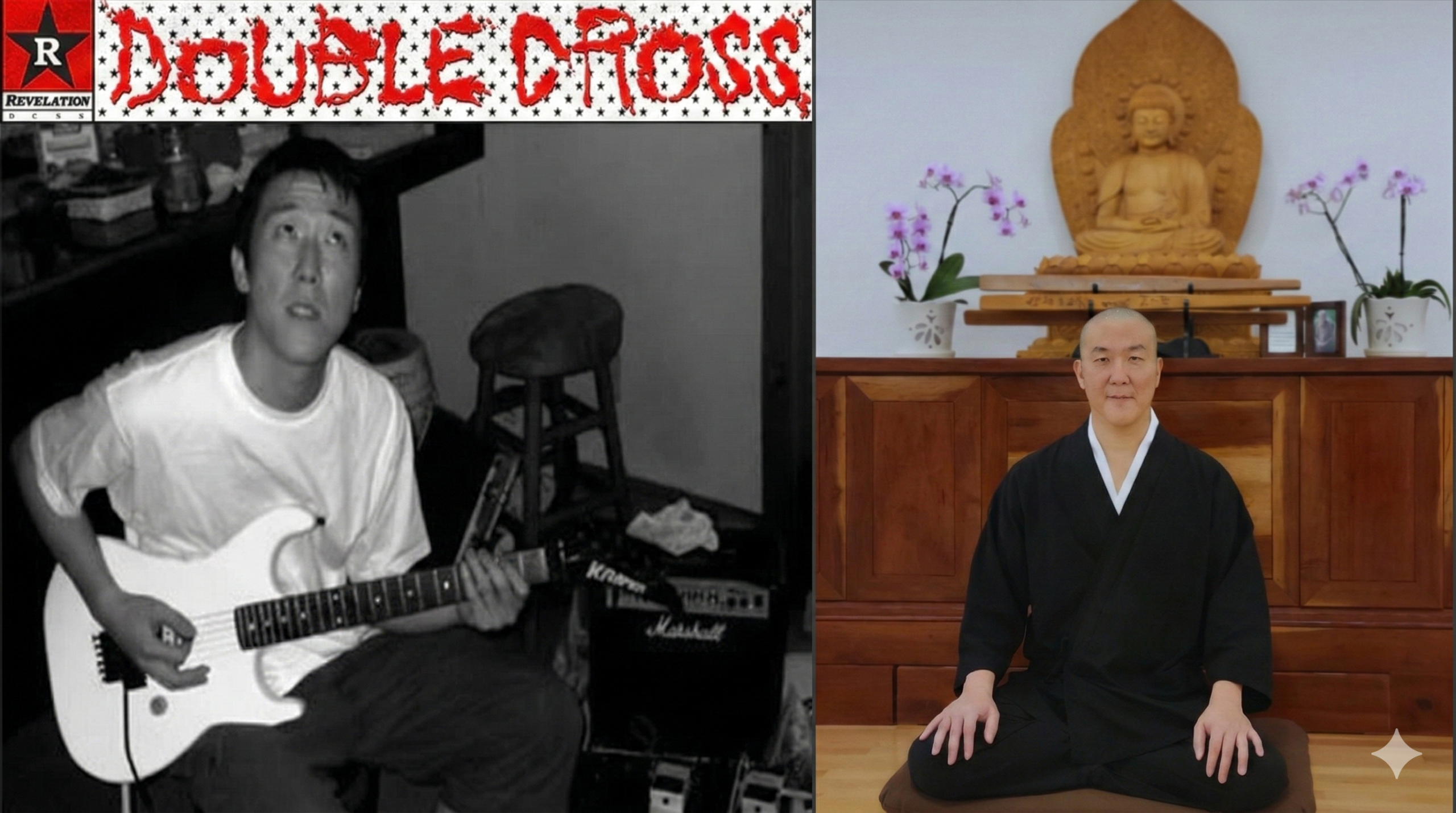
Buddhism is the most “punk rock” religion there is. There, I said it. You might think that’s a controversial statement, but let’s break it down harder than an Acacia Strain song. Both Buddhism and Punk/Hardcore music are all about being true to yourself, seeing past the societal norms pushed on us since birth and breaking free of the suffering caused by the illusionary cultural norms we’re expected to conform to. Nobody, and I mean NOBODY, understands both of these worlds better than former hardcore bassist turned Buddhist monk and scholar, Jimmy Yu. Join us on a journey to explore this unique bodhisattva’s path from punk rock to Prajñā.
Who is Jimmy Yu?
Like Troy Mcclure from “The Simpsons” you may remember him from heavy hitting hardcore bands like “Judge“, “Death Before Dishonor” or his lectures as “Professor of Religion” at Florida State University. Jimmy Yu emerged from New Jersey to define the 1980s New York Hardcore scene as a prolific, mysterious force. Jimmy spent much of his youth as an outcast. When he wasn’t bloodying the noses of his neighborhood bullies in violent street fights he could be found hanging with best friend Mike “Judge” Ferraro. Ferraro became a sort of mentor or older-brother figure to Yu. Taking him to hardcore shows at iconic venues like “CBGBs”. Teaching him to slam dance in the pit. Skateboarding around New York City, and eventually forming their first band, “Judge” with Ferraro on guitar and Yu on the bass.
Then, one day, like a ascetic monk traveling up to the mountains to seek solitude and enlightenment, he simply disappeared from the mosh pit. Or at least, that’s how it seemed to other punks in the area. In reality, his experiences planted the seeds of his monkhood years before he ever picked up a bass guitar. Yu attended the School Of Visual Arts in NYC right after high school. He turned to Buddhism for inspiration for his abstract expressionism pieces. Yu moved into an apartment above a Buddhist temple and began attending Zen retreats. He immersed himself more fully into his practice by writing articles for Chan Magazine. He even sat out on a Judge Tour so he could focus on his academic and Buddhist studies.

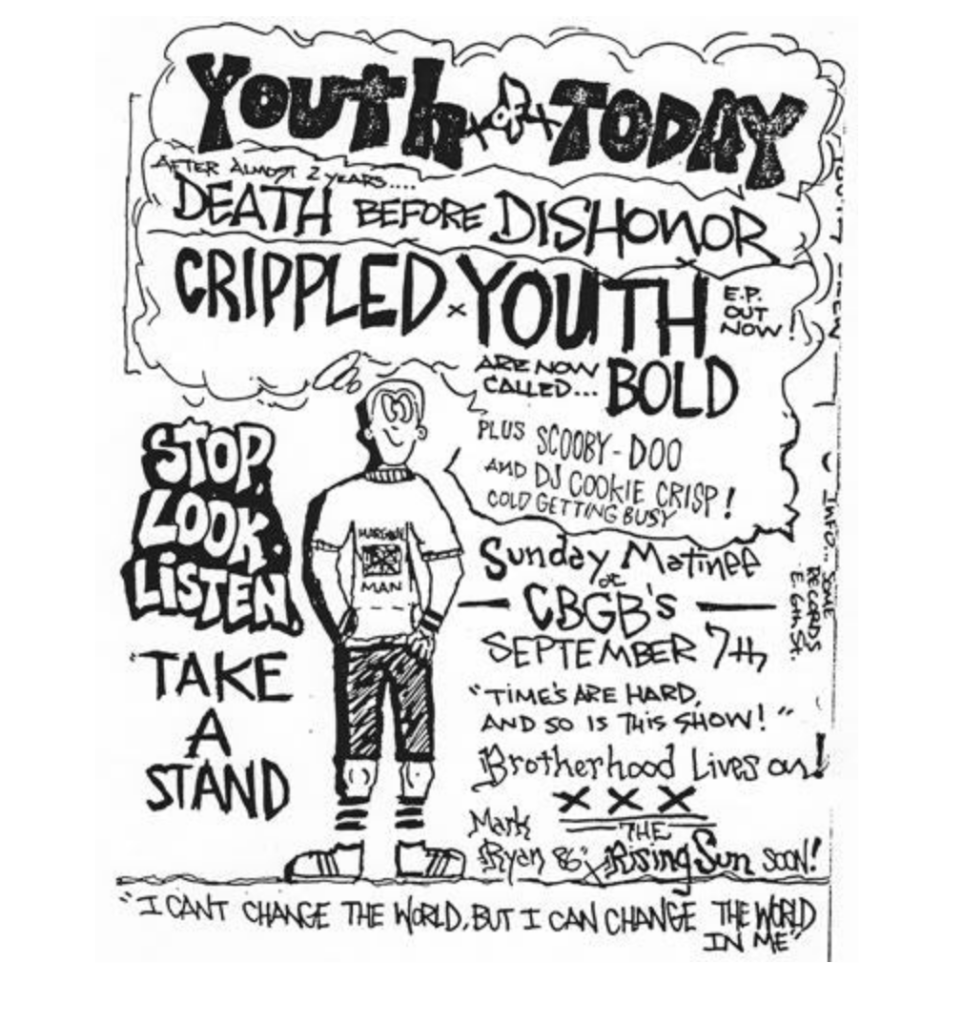
While his disappearance from the scene seemed sudden to others, Jimmy Yu believes he was gradually led to the religion by his art and other interests. In addition to attending art school, Yu created all of the promotional flyers for local hardcore shows. These works of art steered him towards minimalism, where he was inspired by “how just a few brush strokes could express so much”.
He credits his time fist-bumping fellow moshers in the pit with opening his eyes to the interdependence of all beings and the importance of a sangha. He even credits his school yard fisticuffs as a basis for his future belief in non-violence. Stating the experiences trading blows led him to a desire to seek both inner and outer peace. Finally, his years of practicing “straight edge”, a hardcore philosophy where one abstains from drinking, drugs and sex prepared him for a life of living the fifth precept in Buddhism. Which states practitioners should refrain from “intoxicants” that cloud the mind.
His time in playing hardcore in NYC planted the seeds for a life of Buddhist practice. In order to water those seeds Yu left the hardcore scene to study under Chan Master Sheng Yen. Jimmy Yu received ordination and assumed the name ‘Guo Gu’. With this new identity, he spent several years serving as Yen’s assistant and joined the master in leading activities at the Chan Meditation Center in New York, Dharma Drum Retreat Center in New York, Dharma Drum Mountain in Taiwan, and other parts of Europe and Asia.
After several years of study Jimmy Yu left Yen’s tutelage. He traded spiritual practice for academia in order to further his understanding from a more scholarly perspective. In 2008, Yu received his Ph.D. in Buddhist Studies from Princeton University. Shortly after, he began teaching Buddhism and East Asian religions academically as an Assistant Professor at Florida State University. By the year n 2009, he had founded Dharma Drum Mountain Tallahassee Florida (aka the Tallahassee Chan Center). Yu has served as the teacher there since.
In addition to teaching Buddhism in an academic setting and leading the Chan Center Yu has published several books on the subject: “Passing Through the Gateless Barrier: Koan Practice for Real Life” and “The Essence of Chan: A Practical Guide to Life and Practice according to the Teachings of Bodhidharma.”
The Non-Duality of Hardcore, Punk and Buddhism
To outsiders, hardcore punk and Buddhism may seem world’s apart. A lot of people can’t comprehend how modern music and ancient philosophy can harmonize. Yet there are a surprising number of similarities between the two philosophies which we’ll explore below.
The Importance of a Sangha
Young people have been flocking to niche music scenes, like hardcore, for ages for the sense of belonging often associated with the music. Many youths on the fringes of society say they find a sense of both community and family with their fellow concert goers and bandmates. In the modern age, with in-person interpersonal relationships and communities moving online, communities like those found in the music scene are becoming ever more important for fostering connection and camaraderie among young people.
Yu noted this himself when speaking about the alienation he felt growing up as an asian man in a predominately white neighborhood, often leading to fist fights and bullying. The connection felt by young hardcore punk rockers is similar to one of the “Three Jewels” outlined by Shakyamuni Buddha. The Buddha defined the “Sangha” as the community of practitioners, both lay and monastic, in every Buddhist community and temple. The Buddha acknowledged that the Eightfold Path was difficult to follow alone. He emphasized the importance of accountability, shared wisdom, and a “safe harbor” from the distractions of the material world.
The hardcore community offers a similar sense of ‘safe harbor.’ Members of the Hardcore community often describe it as a place that they’re free to be themselves. Where they can throw of the shackles of traditional culture and indulge in individuality without judgement.
Straight Edge: The Fifth Precept in a New Age
The most prominent similiarity between Buddhism and hardcore punk is the emphasis on the “straight edge” lifestyle. Which is similar to adhering to the fifth precept of Buddhism. Which is abstaining from intoxicants. The term “straight edge” comes from the 1981 song of the same name by the iconic hardcore band Minor Threat. The band’s frontman, Ian MacKaye, wrote the song as a personal manifesto. Sick of seeing his friends burned out on drugs and alcohol, MacKaye pledged to abstain from the substances in order to preserve his creative “edge”. He wanted to preserve his mind so he could devote himself fully to his music.
This is shockingly similar to The Buddha’s fifth precept. Which states all Buddhists should refrain from intoxicants that cloud the mind. The first four precepts are generally considered to be moral laws that stop Buddhists from harming others. The fifth precept is a protective law. Meant to preserve the first four and prevent practitioners from straying from the path. In a sense, the fifth precept is meant to preserve a practicing Buddhist’s “edge”, much like MacKaye’s philosophy. While the end goal is different, creative expression vs. enlightenment, the core concept is the same. Remain sober in order to protect the mind.