Are you interested in learning about Buddhism but don’t know where to start? Have you tried reading about Buddhism in the past but were intimidated or confused by verbose and overly-wordy antiquated texts? Then this list is for you! The philosophy and beliefs of this 2,500 year old religion are as vast and wide-ranging as the religion is ancient. This can make finding an entry point for curious newcomers as hard to find as enlightenment itself. To help you on your spiritual or philosophical journey we’ve assembled a list of the best books for new buddhists written in simple, easy to understand english. The books on this list were selected for their digestible, broad insights into Buddhism as a whole.
Some more traditional texts and books feel so antiquated that they make you feel like a Buddhist monk trying to decipher the hidden message in a Koan. This list solves that issue. Instead of getting bogged down with all of the intricacies of all the different sects and practices, these books for new buddhists will provide you with a strong base to build your knowledge on.
They’re arranged in no particular order, which means whether you’re a new Buddhist, or simply someone curious about Buddhism in general, you’ll be able to pick any of the books off the list as a starting point without having to worry about over-complicated language or details. We’ll give you a quick overview of both the author and their work, in addition to a brief overview of the book itself. By the end of this list you’ll have the context needed to make a decision on where you want to dive into the best books for new buddhists!
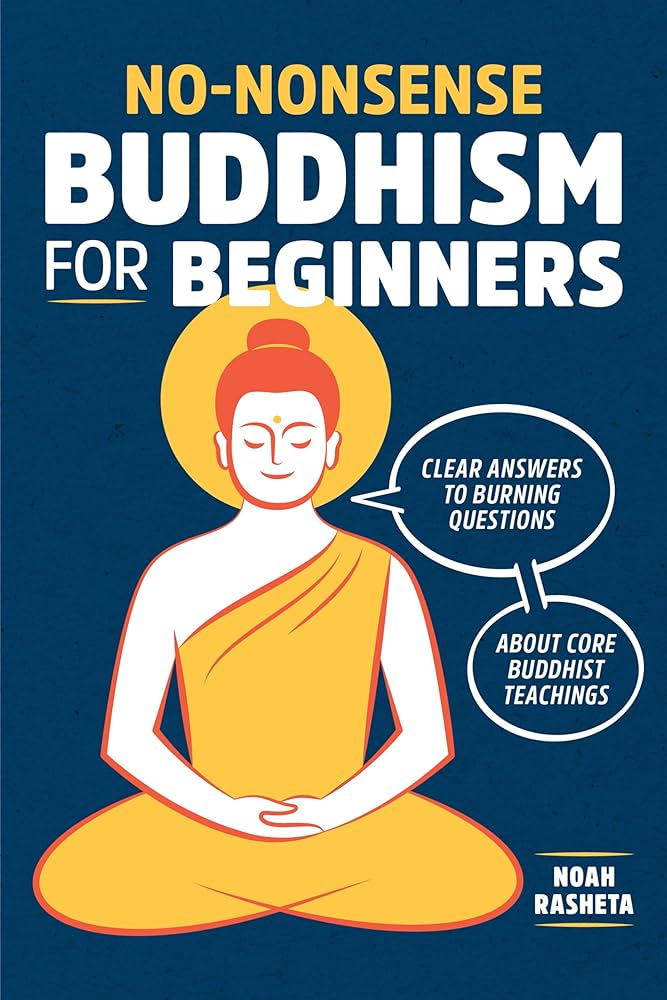
No-Nonsense Buddhism for Beginners
Author: Noah Rasheta
Noah Rasheta is a father, Director of Marketing and IT Leader, podcaster, author and most importantly: Buddhist! He’s most well known for his podcast: The Secular Buddhism Podcast. Which was featured in our “Best Buddhist Podcasts of 2025” article earlier this year. Rasheta is a self-described “Secular Buddhist”. You might be wondering, what is Secular Buddhism? Rasheta describes it as “completely disconnected from any of the dogma or from any of the world views within Buddhism that are connected to anything supernatural.” His secular perspective makes his work an excellent starting point for people interested in Buddhism as a whole. Even if they haven’t yet started learning about all the different sects.
“No-Nonsense Buddhism for Beginners” is written in a simple question and answer format. It’s organized into four main sections: The Buddha, core concepts, core teachings and core practices. You’ll learn the answers to questions like: “Who was the Buddha?”, “What is the Noble Eightfold Path?”, and “Do I have to be vegetarian to be Buddhist?“. In addition to the answers to those questions, Rasheta sprinkles in quick callouts throughout the book that offer down-to-earth examples of Buddhism that are all around you. The conversational style and answers to basic, yet essential, questions make No-Nonsense Buddhism for Beginners an essential read for new buddhists. Especially those starting from scratch. It’s one of the best books for new buddhists grounded in a modern POV.
Buy No-Nonsense Buddhism for Beginners here!
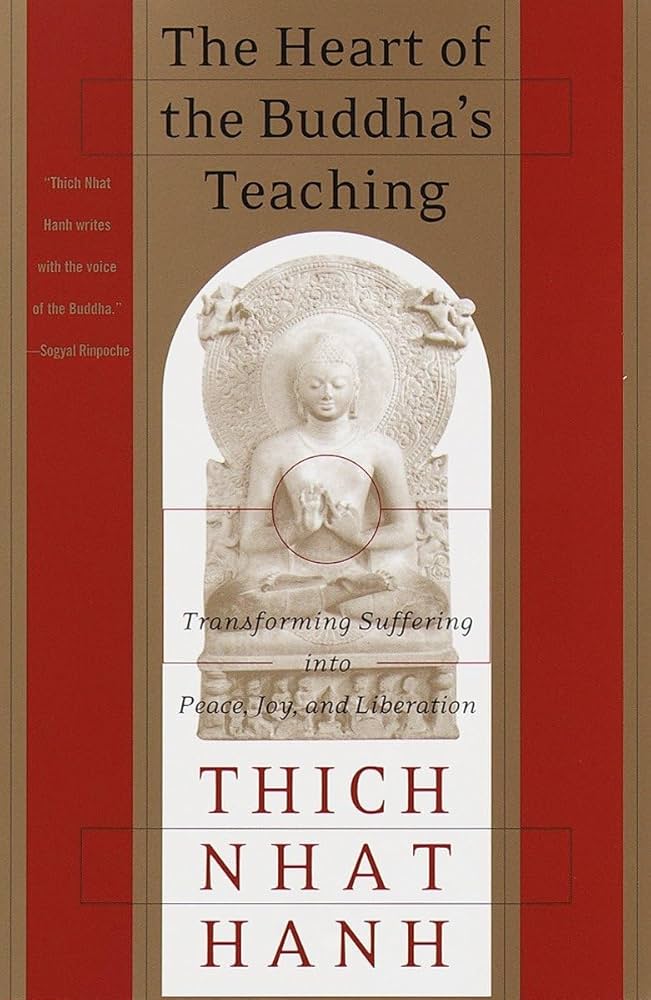
The Heart of the Buddha’s Teaching
Author: Thích Nhất Hạnh
Even if you’re brand new to Buddhism you’ve probably heard of Thích Nhất Hạnh. He’s also known as “the father of mindfulness”. Nhất Hạnh is widely recognized as one of the most important figures in bringing Buddhism to the West. He has founded dozens of monasteries and practice centers, the most famous being the Plum Village Monastery in southwest France. Nhất Hạnh is a Zen master that developed Engaged Buddhism. What is Engaged Buddhism? It’s a form of Buddhism focused on applying Buddhist ethics to contemporary situations. Most of those being social, political, environmental, economic suffering, and injustice-centered in nature. His beliefs generally align under the Mahayana sect of Buddhism. Despite his own background, his book “The Heart of the Buddha’s Teaching” takes a wider view of Buddhism as a whole. Making it another one of the best books for new buddhists.
“The Heart of the Buddha’s Teaching” is a comprehensive guide to core Buddhist teachings. Some of which include the Four Noble Truths and Noble Eightfold Path. Despite english being his second language, the book is easy to read and understand even for newcomers that don’t know the first thing about Buddhism. It’s one of the most succinct and direct books written about Buddhism that also captures the big compassionate heart that Buddhism brings with it. Nhất Hạnh puts a big emphasis on the concept of “loving-kindness” in all his teachings. Loving-kindness underscores all the more general Buddhist teachings included in his book. If you’re looking to understand Buddhist concepts, and how they intertwine with compassion and empathy, this book is an excellent place to start.
Buy Heart of the Buddha’s Teaching here!
Why Buddhism Is True
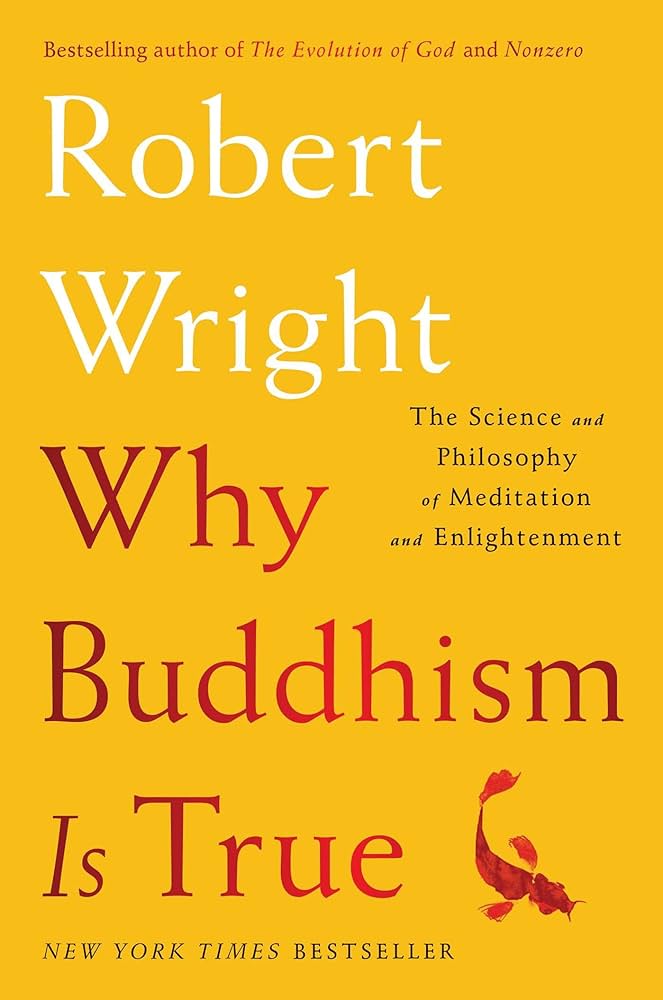
Author: Robert Wright
Robert Wright is an American author and journalist. He is a graduate from Princeton University and has dedicated his life to the study of philosophy, anthropology, evolutionary psychology, history, politics, international relations, and religion. He is the author of five books, three of which focus on various religious topics. Wright is highly educated, and as such takes a more analytical and scientific approach to understanding Buddhism. Like Rasheta, Wright focuses on a Westernized form of Buddhism with an emphasis on the practice of mindfulness meditation and stripped of supernatural beliefs.
“Why Buddhism Is True” incorporates modern science into ancient practice. Consequently Providing evidence to long-standing claims that meditation practice has cognitive benefits. The book has been criticized for shedding the spiritual aspects of Buddhism. With many critics arguing that Buddhism without spirituality isn’t buddhism at all. With that in mind, it’s still a good beginning point for Buddhist-curious readers who want to understand the long-touted benefits of meditation practice and living a life according to the Buddhist precepts of conduct. Wright has addressed these criticisms with an even more controversial statement. He claimed Buddhism isn’t a religion at all but a: “mind science, therapy, philosophy, or a way of life based on meditation.” This isn’t your traditional Buddhist text. It’s more of a modern POV that could be beneficial to more secular minded readers that want to understand some core tenants of Buddhism.
Buy Why Buddhism is True here!
Mindfulness in Plain English: 20th Anniversary Edition
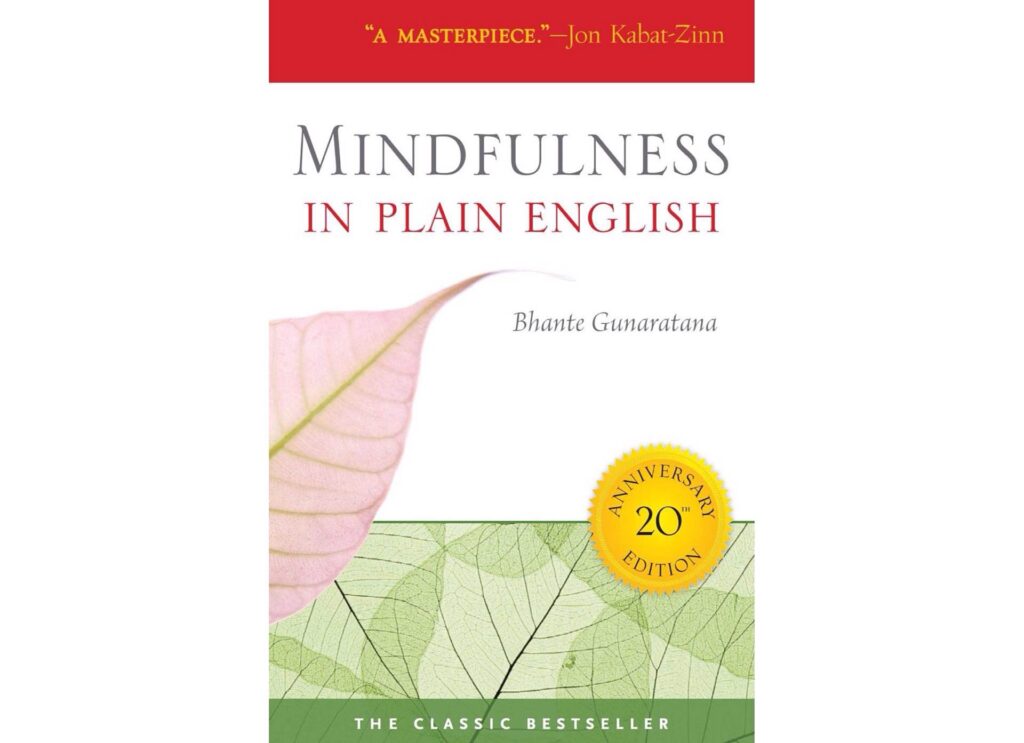
Author: Bhante Henepola Gunaratana
Bhante Henepola Gunaratana is a Sri Lankan Theravada Buddhist monk. Meaning he provides a slightly different perspective from Thích Nhất Hạnh’s “The Heart of the Buddha’s Teaching”. Because Nhất Hạnh’s is rooted in the Mahayana tradition. Like Nhất Hạnh, Bhante Henepola Gunaratana, also known simply as “Bhante G”, is another major figure responsible for bringing Buddhism to the West. He currently serves as the abbot of the Bhavana Society, a monastery and meditation retreat center that he founded in High View, West Virginia, in 1985.
Bhante G is somewhat of a hybrid of two other authors on our list, Thích Nhất Hạnh and Robert Wright. In his youth he formally studied Buddhism and was ordained as a monk after years of study at various temples in Sri Lanka. In his later years he went on to earn a Masters degree. Then, a Doctorate of Philosophy in 1980 from American University. His decades of formal education allow him to provide readers with a unique perspective that is both spiritual and analytical.
“Mindfulness in Plain English” is essentially a “meditation manual”. In the preface Bhante G states “our intention to present you with the clearest and most concise directions for Vipassana meditation available in the English language.” What is Vipassana meditation? In a nutshell, it’s the ancient Indian technique for self-observation. With a big focus on the mind-body connection. The end goal is to purify the mind and achieve enlightenment. Bhante G also says right in the preface of the book it was written in the most simple language possible.
It’s intended for an audience without a formal teacher, which applies to most Buddhist newcomers who are interested, but haven’t make the commitment of finding a teach or sangha yet. This Buddhist book for newcomers doesn’t touch on the philosophy of Buddhism more than it needs to. Instead, it focuses solely on meditation. Therefore making it perfect for anyone wanting to understand meditation and its benefits without being bogged down by the higher spiritual or philosophical aspects. It’s the best books for new buddhists with a focus on meditation.
Buy Mindfulness in Plain English: 20th Anniversary Edition here!
Buddhism for Dummies
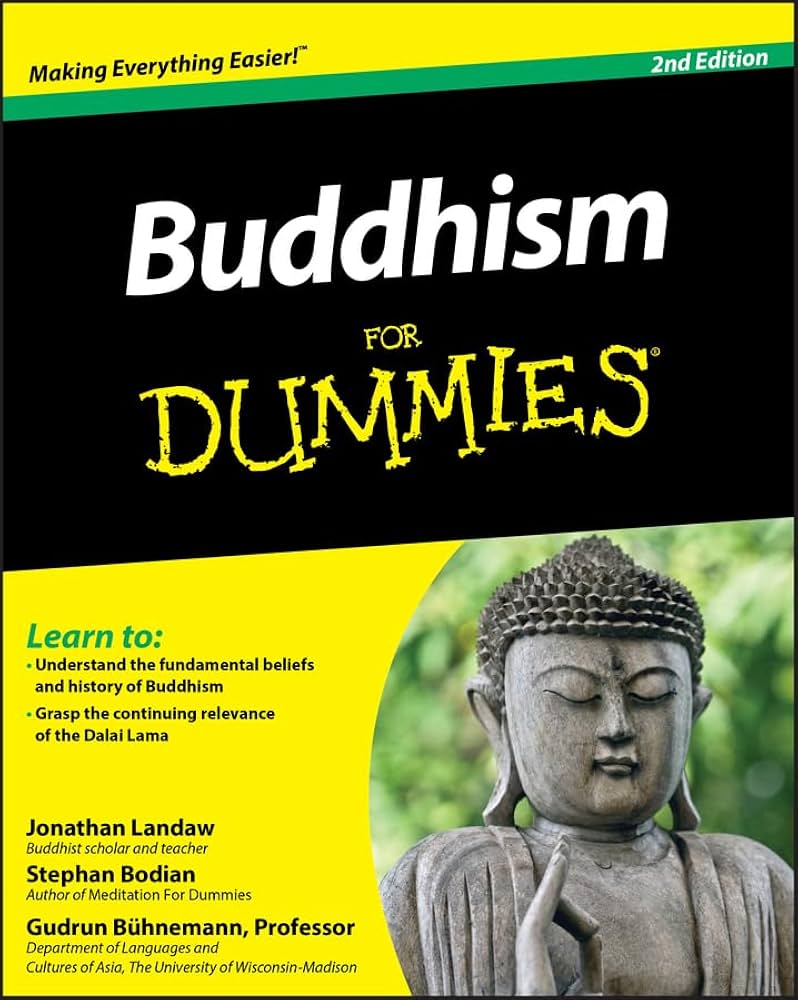
Authors: Gudrun Bühnemann, Jonathan Landaw, and Stephan Bodian
Don’t let the title fool you. This one isn’t for “dummies”. Written by the power trio of Gudrun Bühnemann, Jonathan Landaw, and Stephan Bodian “Buddhism for Dummies” provides one of the most concise, while simultaneously, all-encompassing overviews of Buddhism for beginners available on the market. Gudrun Bühnemann is a professor of Sanskrit and Indic Religions. Jonathan Landaw the former english editor of the Translation Bureau of His Holiness the Dalai Lama in Dharamsala. Stephan Bodian a student of Zen, Dzogchen-Mahamudra, and Advaita Vedanta schools of Buddhism as well as a meditation teacher. These three experts in their own fields of study combined forces to create one of the most easy to understand and accessible texts on Buddhism available in the West.
Buddhism for Dummies gives aspiring Buddhists or curious newcomers everything they need to know. It covers every school of Buddhism: Theravada, Tibetan, and Mahayana. It touches on the history and relevance of Buddhisms most well-known figures: The Dalai Lama. And even touches on the more day to day observances, celebrations, styles, practices, meditation, and other activities of practicing Buddhists. This book touches on everything without going into overwhelming detail. That includes the history, core concepts like dependent arising and five Skandhas, and the distinct differences and commonalities of each sect. It’s written and organized into easy to read sections and language. Think of it as a “Sparknotes” of every Buddhist text known to man. It’s simplicty and organization makes it one of best books for new buddhists who are starting with no prior knowledge.