
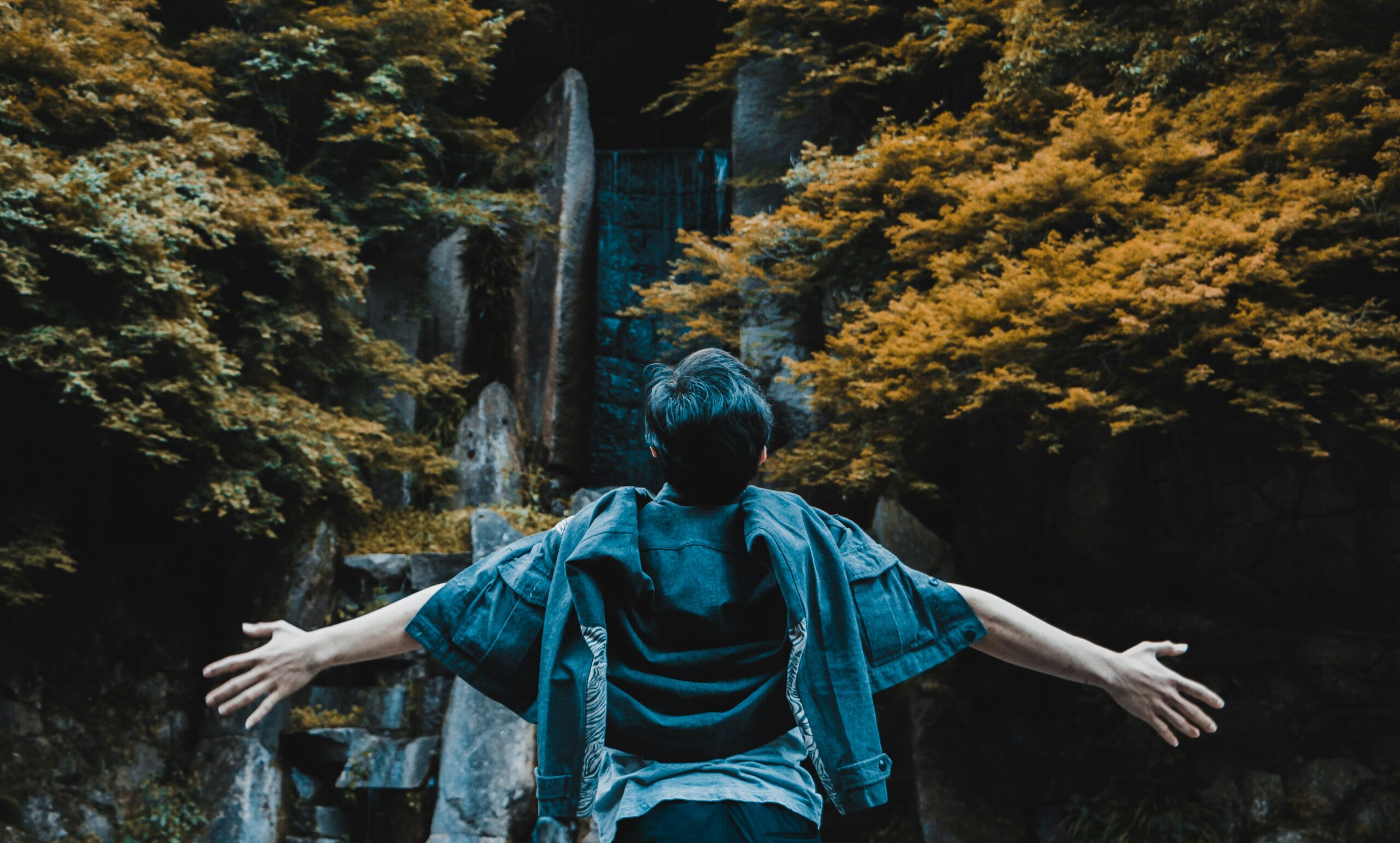
You’ve probably heard the term “Forest Bathing” being tossed around on TikTok or your social media platform of choice lately. But what you might not know is that it’s a relatively modern term that originated in Japan in the 1980s. It has since been rebranded, repackaged (you can almost say gentrified) to be more “instagrammable” and sharable for a modern audience. Despite being “content-ified” to a more algorithm friendly term for our content creating friends, the practice has been seen as an effective therapy method in Japan since the 1980s. We’re taking you on a journey to discuss the what, how, why and where you can engage in “Forest Bathing” or “Shinrin-yoku”.
What is Forest Bathing or Shinrin-yoku?
In Japan “Forest Bathing” is known simply as Shinrin-yoku. Which translates literally to “shinrin” or “forest” and yoku which means “bath/bathing”. It’s as simple as it sounds. It’s the therapeutic act of mindfully spending time in nature. Metaphorically “bathing” yourself in a forest. Trade out your smartphone and headphones for some comfy clothes, hiking shoes and a bottle of water and hit the nearest trail, park, or even your own backyard!
A Brief History of Forest Bathing
The term Shinrin-yoku was first coined in the Hokkaido region of Japan in the 1980s. You can get real nit-picky and pedantic about who the first culture was that acknowledged the benefits of spending time in nature. But at the end of the day, the first documented case of the term Shinrin-yoku or Forest Bathing being published belongs to Tomohide Akiyama. Who at the time was the director of the Japanese Ministry of Agriculture, Forestry and Fisheries. Several studies had been conducted in Japan in the 1980s that officially recognized the mental and physical health benefits of spending time in forests.
Akiyama had read some of these studies and decided to officially put forward shinrin-yoku as a recognized practice. He made it his mission to promote its benefits to the Japanese public and establish guidelines for its implementation. Japan’s bubble-economy boom sparked Akiyama’s passion. Stock prices were soaring, the country was urbanizing at unprecedented rates, and Japan was quickly becoming the flashy technological capital of the world.
As the cities grew, the people of Japan simultaneously grew away from nature. Akiyama urged the public to reconnect with nature not only to save themselves from the modernization sweeping across Japan, but also to protect nature itself from the deforestation that was occurring as cities grew. He hoped that if people spent time in forests and were able to find therapeutic comfort within them, they would want to protect them for their mutual benefit.
Today, Forest Bathing is more popular than ever. The practice has expanded far beyond Japan to almost every country on earth. There’s even a Forest Bathing Institute based out of the UK. Check out their website here for a more in-depth guide on the practice, its history, and its future!
How do I Engage In Forest Bathing or Shinrin-yoku?
When most people think of Shinrin-yoku the mind conjures up images of long haired hippies frolicking through the forest. Treading barefoot through leaf-littered dark, nutrient-rich humus as they stop to smell the flowers or even hug a tree or two. And to be fair, that’s exactly what it can look like. But it doesn’t have to feel that free-spirited if that’s not your thing. Forest Bathing can be as simple or as structured as you want it to be. All you have to do is go out into a place with trees, grass and native vegetation with an open mind and sharp senses. Take a stroll or find a nice spot to observe whatever nature has to offer every one of your five senses.
If you want to take a more structured approach to Forest Bathing you can follow the outline below:
- Listen to the forest sounds – Hear the birds chirp and leaves rustle in the wind.
- Touch the ground, the trees, and the leaves – Feel the breeze on your skin. Kick off your shoes and feel the softness of the decomposing organic matter below your feet.
- Smell the flowers and other essential oils of the plants and trees – Notice how the smells vary by season. Breathe in the rich earthy decomposing leaves in the fall or smell the pollen in the spring.
- Look at your surroundings and scenery – Notice how the shadows play off the ground in your backyard garden or take in the beautiful vista at your local hiking trail.
- Taste the crispiness of the air while breathing – Try to taste the humidity in the summer or sharp coolness in the winter.
At the end of the day, all you have to do is go out in nature with an intent to be mindful. Eliminate all distractions. Instead of giving your Spotify playlist another listen, mindfully exercise your sense of hearing to enjoy the sounds of the forest. Instead of looking around you for the perfect backdrop for you next profile pic, look around for the sake of simply looking and enjoying natural vistas. Forest Bathing should be a sensory experience. It’s a time to slow down and disconnect from the digital world. Forget about likes and follows. Put your hectic day full of zoom calls at the office tomorrow to the back of your mind. That Netflix show you feel the need to binge watch as quickly as you can so you can avoid spoilers? Forget about it for now. Allow yourself to disconnect from the Matrix for a while.
Open your senses and soak in your surroundings. First, imagine yourself in a bathtub. Then visualize yourself slipping under the water until you’re fully submerged. This analogy might sound overwhelming. But don’t let that intimidate you! The goal isn’t to feel trapped or claustrophobic. Instead, you should feel cradled and embraced by nature. Fully immersed in a comforting, natural setting.
Why Should I Start Forest Bathing or Doing Shinrin-yoku?
There are a number of reported health benefits to Shinrin-yoku. In fact, studies have shown a strong correlation between spending time in nature and mental health and mood improvement. Studies in Japan and Europe have found short-term reductions in anxiety, depressive mood, and perceived stress after guided forest-therapy walks. With the effects from walks in nature showing sustained improvement on the the Profile of Mood States (POMS) scale lasting up to three hours. Researchers have noticed long-term effects, too. A 2021 study from South Korea showed that participants who attended weekly forest-therapy programs for eight weeks maintained significant reductions in perceived stress. As well as improvements in sleep quality compared with a control group.
So, in classic Buddhist fashion, we see non-duality in the merits of spending time in nature. The benefits of Forest Bathing extend beyond the mind and into the body. Proponents of Shinrin-Yoku point to studies that show the practice can be an Immune system booster. While simultaneously decreasing blood pressure and other physical symptoms of stress. Participants in various studies were shown to have decreased pulse rates and cortisol levels after just a few hours of walking in the forest. Natural killer cells. The cells which provide rapid responses to virus-infected cells, stressed cells and tumor cells. Were found to have increased in those same participants.
Advocates of Forest Bathing point to phytoncides as the root cause of the mental and health benefits of Shinrin-yoku. Additional studies show that organic plant life release the beneficial compounds which are then inhaled by humans. Thus leading to the benefits listed above.
Where Can I go Forest Bathing?
You don’t have to go all Henry David Thoreau and live in a sparse cabin in the woods. Mahākassapa, one of the Buddha’s chief disciples, also chose to lived ascetically in forests and mountains. Eventually becoming a symbol of extreme renunciation and solitude. We’re not asking you to be like either of these guys. Even The Buddha himself rejected asceticism as a path to enlightenment. If you’re lucky enough to live somewhere that you have easy access to hiking trails or the great outdoors, that’s great! If that’s the case simply hop on AllTrails.com (one of our favorite apps for finding hikes) and find a hike that suits your needs nearby.
You might not have access to the great outdoors nearby, that’s fine too! You can engage in forest bathing in your very own backyard or a nearby park. Simply settle into your favorite chair in your backyard and open your senses. In fact, some practitioners living in big, bustling cities even engage in Shinrin-yoku indoors. You can arrange a small garden in your home to engage in the practice. Grab some potted plants. Perhaps a herb garden to lend a hand to your sense of smell. Enjoy the presence of life within in your home. It doesn’t matter where you are, with an open mind and determination to connect with nature you can always find a way to engage with nature.